

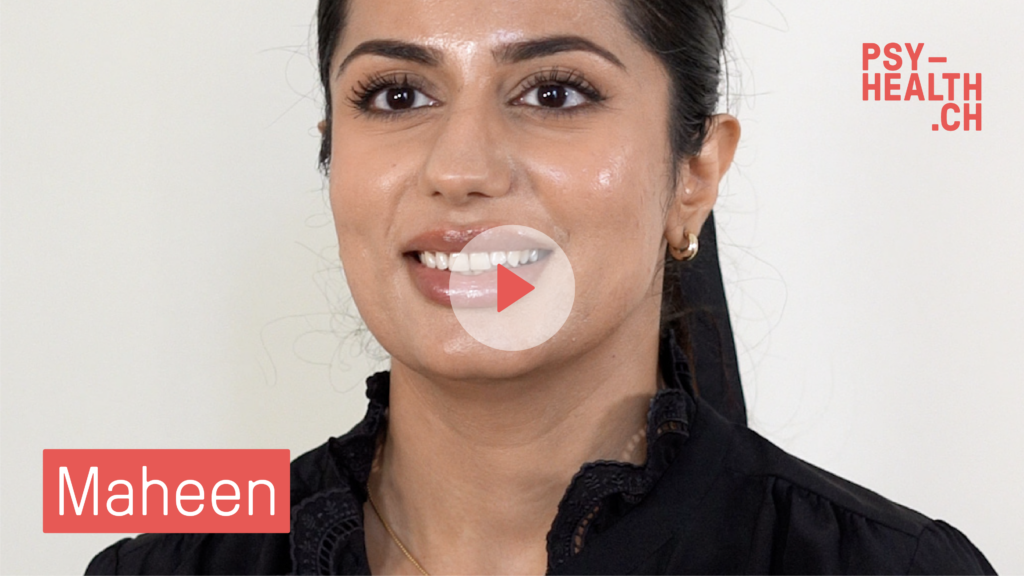
Testimonial
What can I do to feel good?
Here are 10 ways to help you achieve a state of wellbeing:
- Talking: Talking about your feelings, problems and experiences with your family, friends or community can help relieve pressure and bring new perspectives or solutions to light. It can also be helpful to talk and share in your own language.
- Participate/get involved: in a community, community centres, language/dance/singing/sports classes, etc., by sharing your wishes, interests, fears or hopes for things that are important to you, by taking part in community projects, etc
- Don’t give up/Overcoming life’s challenges: The key to overcoming life’s challenges (shock, grief, trauma) is time, concentrating on your most important tasks and making time for yourself and others, accepting the support that is offered.
- Self-acceptance: understanding your body and the signals it gives you so that you can make choices that are in your best interest, setting your limits, knowing and accepting your strengths and weaknesses.
- Engage in creative activities: to express your desires, fears or other thoughts that are difficult to articulate, to release tension, to relax and to regain your strength. Do activities that you enjoy, that you used to do in your home country, and have a space of your own where you can explore and create.
- Relax: A state of calm and relaxation enables you to appreciate things and people better and to make informed decisions. Take time for yourself, do some activities on your own and without your children to take a break from family life and recharge your batteries.
- Learn new things: to take a break from everyday life, boost your self-esteem and explore new ideas. Learning a language can help you become more independent and autonomous, meet people with similar backgrounds and make new friends. Learning something new can be stimulating and rewarding and give you a sense of personal achievement.
- Be physically active: to clear your head, relieve pressure and get away from the stresses of life. A minimum of 30 minutes a day or 2.5 hours a week is recommended.
- Stay in touch with friends: to take a break from everyday life, get out of the house and meet new people. Talking to friends helps you feel heard and supported, and receiving constructive criticism helps you become a better person, find solutions and open your mind and perspective.
- Ask for help: To avoid feeling alone, understand and recognise your own limitations. Ask for support and help when things aren’t clear, for example to resolve a situation (‘peer support’ between parents and their network). Asking for help with life’s challenges is not a sign of weakness, it takes a lot of courage.
Bonus: Healthy food and a quiet, screen-free, stress-free environment at mealtimes can also contribute to wellbeing.
Resources for everyday life
The Sui SRK app: Free application offering information on everyday life topics, resources for self-care, and a chat feature to connect with a professional for support.
Migesplus.ch: A Swiss Red Cross platform providing practical information about health and life in Switzerland in multiple languages
Information video on daily life in Switzerland (with text reading option)
This brochure summarises the different aspects of the Swiss healthcare system.
Information brochure for refugees and provisionally admitted persons
Stress
Studies show that there are four situations in which stress hormones are produced:
- When you feel you have no control over the situation
- When a situation is unpredictable
- When a situation is new
- When a situation threatens our ego
To reduce stress, it is therefore important to think about the stressful situation and try to change it as much as possible. For example, if our skills and ego are being tested and we feel that others are doubting our abilities, we could increase our self-confidence and self-esteem, learn to believe in our abilities and stop constantly questioning ourselves. By dealing with these stressful situations in advance, it will be possible to reduce these unpleasant feelings in the future.
In times of stress, other tools can be useful and can be found here.
There are also a number of tools you can use to reduce your stress levels, recharge your batteries and build your resilience:
- Focusing on the here and now, giving yourself a gentle hug, grounding yourself and putting intrusive thoughts in an imaginary box are all ways to relax, release tension and reconnect with the present moment when you’re feeling worried and/or at your wits’ end.
- Doing deep breathing exercises and setting aside a specific time in the day to deal with your problems (rather than doing it all day long) are tools you can use when you’re feeling anxious or nervous and want to regain control.
- Breathing exercises and visualising positive things are also ways to calm yourself down when you want to make the right decisions.
- To develop your resilience and strengthen your internal coping mechanisms, think optimistically and be kind and compassionate. You can also make a list of your own resources and the things that make you feel good, so that you know what to do in the future based on your experience.
The importance of community
During certain transitional periods, such as moving to a new country or getting to know a new culture, it is common to feel lonely, isolated and sometimes even a little lost. To ease these moments, your local community can provide invaluable support: you can speak your own language, get and share information and advice to help with administrative procedures and integration in general. It is also a good place to connect with others who have had similar life experiences. Community events are an opportunity to get together, share happy moments, take a break from everyday life and let off steam. Community is an important resource for coping with life’s challenges and feeling fulfilled.
However, it is important to remember that your community should not be your only resource. It is important to be open to the wider society in your host country, for example by meeting new people and interacting with your neighbours. This kind of social interaction helps to alleviate loneliness and does a world of good.
Swiss associations offering help and support
A number of associations provide assistance:
- Caritas Suisse (Caritas Switzerland)
- Red Cross Switzeland
- PM+: Individual sessions in different languages to learn how to manage daily challenges and emotional stress.
- Centre social protestant (CSP) – (Protestant Social Centre)
- Organisation suisse d’aide aux réfugiés (OSAR) – (Swiss Refugee Aid Organisation)
- Support groups bring together people affected by similar situations to share experiences and help each other (on topics such as parenting, health, divorce, depression, addiction and many others). Click here to find a group in your area.
- Femmes-Tische/Hommes-Tische: Meetings where men and women can discuss issues around family, health and integration in small groups and in their native language. These meetings are held in different languages.
For legal assistance:
- Legal advice office (BCJ) in your canton of residence:
- For assistance in a number of languages and step-by-step help with the asylum process: Asylex platform
- For legal assistance (for all migrants): International Social Service Switzerland (ISS – Switzerland)
Associations and organisations by canton
Fribourg
- Association La Red: A place for socialising with free activities
- Association ParMi: intercultural exchange, support and integration for young people
- Association Passerelles: intercultural meeting space
- Caritas Fribourg: Advice and social support
- French and German courses for people from a migrant background
- Coordination of language courses for immigrants in Fribourg
- CCSI – SOS Racism Fribourg: Legal support
- Ensemble, Mental health of people with a migrant background
- Espacefemmes: a place where women from all walks of life can meet, get advice and receive training
- LivrEchange: Intercultural library
- Permanence juridique bénévole: Free legal advice
Geneva
- Agents de santé (Healthcare agents)
- Appartenances-Genève: Providing support and helping families and individuals who have suffered from collective violence to integrate
- Asylum LGBTIQ+: accompaniment and support for LGBTI refugees
- Association de médiatrices interculturelles (Intercultural Mediation Association): integration through intercultural mediation
- Association Elisa – asylum: support and legal defence
- Association Pluriels: Centre for ethnopsychological studies and consultations
- Aumônerie Genevoise Oecuménique auprès des Requérants d’Asile et des Réfugiés (Geneva Ecumenical Chaplaincy for Asylum Seekers and Refugees)
- Bonjour Genève: Living in and getting to know Geneva – all the practical information
- Camarada: Welcome centre for training and professional integration
- Caritas Genève: Legal and social support
- Centre de La Roseraie: Welcome centre for discussions and training
- Carrefour Orientation solidarité: Helping families to integrate
- Red Cross Geneva: Integration activities for senior migrants
- CSP Genève: legal advice
- Ecole des parents (Parenting school) – Programme petits pas (Small steps program): Guidance and support for parents
- EPER: Improving the quality of life of older migrants
- Permanence juridique: Free legal advice
- Online directory of French and literacy courses
Jura
- The Consultation Branch and Racism and Discrimination Advice Centre
- Association jurassienne d’accueil des migrants (Jura association for the reception of migrants): Reception, support, accommodation and social services
- Avenir Formation: language classes for migrants
- Centre d’animation et de formation pour femmes migrantes (Activity and training centre for migrant women): a place to meet, get advice and encourage integration
- Caritas Jura: Social and legal support
- The AJAM Community Health Centre (Jurassian Association for the Reception of Migrants)
- Mouvement jurassien de soutien aux sans-papier et migrants (Jura Movement in support of undocumented immigrants and migrant populations)
Neuchâtel
- Bel horizon: a meeting place and training centre
- Caritas Neuchâtel: Social and legal support
- French courses as part of the cantonal integration programme
- CSP Neuchâtel: legal advice
- Droit de rester Neuchâtel: Defending the right to stay
- L’AMAR: Multicultural meeting place
- Plateforme – asile Neuchâtel: Information platform
- RECIF: Training, meeting and discussion centre for foreign and Swiss women
- Service de la cohésion multiculturelle (COSM) – (Multicultural Cohesion Service)
Ticino
- Agence Derman SOS Ticino: Intercultural interpretation services to assist with communication difficulties and linguistic or cultural misunderstandings
- Antenna MayDay: Free and confidential advice on social and health services, as well as health promotion initiatives
- Assistance with Return: Information on the voluntary departure of asylum seekers from Switzerland and support for reintegration into their country of origin
- The “Il Tragitto” Association: Centre for socialisation, training, and support for families and children, with a particular focus on integration. It is based in Lugano and Locarno
- Casa Astra: Emergency reception centre in Mendrisio
- Casa Marta: Emergency reception centre in Bellinzona
- Centro Calicantus: Socialisation centre in Chiasso and a referral service for the migrant population
- Socialisation centres in Ticino: Centres offering activities, games, and opportunities for children and families to come together and share experiences
- The “Baobab” Cooperative: Socialisation centre in Bellinzona that features a multilingual intercultural library, organises meetings for children and families, and provides socio-educational street activities for young people aged 12 to 20
- The OSC Contact Centre (0848 062 062): Provides access to the services of the Cantonal Socio-Psychiatric Organisation, ensures prompt support, and offers information about the mental health services provided by the OSC
- The Discrimination Prevention Centre: Free and confidential support and advice services for individuals who have experienced racial, religious, gender, or sexual orientation discrimination
- SOS Ticino Legal Service: Provides legal advice and representation concerning residence permit issues
- The Caritas Ticino Social Service: Advice, financial management assistance, administrative support, psychotherapy, family support, as well as debt prevention and treatment
Valais
- Centre suisses-immigrés Valais (Swiss – Imigrants Centre – Valais)
- Language classes in Sion
- Language classes for asylum seekers
- OSEO Valais: professional integration of migrants
- Pépites d’or is an association that promotes the skills of migrant women and cultural diversity
Vaud
- Appartenances: a place for social integration
- ActLab: Individual sessions in different languages to learn how to manage daily challenges and emotional stress.
- Association Panmilar: Support through pregnancy and childbirth
- Association Nouvelles Perspectives: French and citizenship courses, integration workshops, as well as health prevention activities
- Astree: Support for victims of all forms of trafficking and exploitation
- Cantonal Office for the Integration of Foreigners and the Prevention of Racism: a platform and brochure providing all the information you need to get settled
- Caritas Vaud: social and legal support
- Carnet d’adresses Petite Enfance (Address book – Early childhood): support for migrant families
- CSP Vaud: legal support
- EPER: Legal aid service for exiles and the Age et migration program
- Espace AMIS: An intercultural meeting place in Aigle
- Français en jeu: French courses
- Parent-child meeting places for 0- to 5-year-olds that are free of charge: Maisons vertes and Association Arc-Echange
- List of migrant associations: Lausanne and surroundings
- Plateforme-asile Vaud: Information platform on the reception of asylum seekers and refugees in the canton of Vaud + language courses on offer
- SOS Asile Vaud: Asylum policy, migration policy: information, organisation in the network and support for grassroots initiatives
- ‘1001 histoires dans les langues du monde’ is a safe environment for engaging storytelling within families and groups. Readings and activities are held regularly in a range of languages.
Language barrier
- Getting in touch with associations or organisations can be difficult when you don’t speak the local language. A number of aid associations (e.g. Caritas, the Red Cross and OSAR) can provide interpreters to help you communicate in your mother tongue.
- There are also interpreting agencies, listed at www.inter-pret.ch, that provide community interpreters. They can accompany you to administrative, medical or legal appointments.
- Your local community can also offer support with administrative formalities or in contacting a doctor, for example.
- There are also free applications that can be handy for translation and communication:
- Tarjimly – Refugee Translation
- Refugee Phrase Book (essential everyday phrases in over 50 languages)
- Refugeye facilitates translation and communication using pictograms.
- There are also free smartphone applications that you can use to learn the local language: Duolingo, Babbel, MemRise, HelloTalk, etc.
- The fide page contains a list of accredited language courses